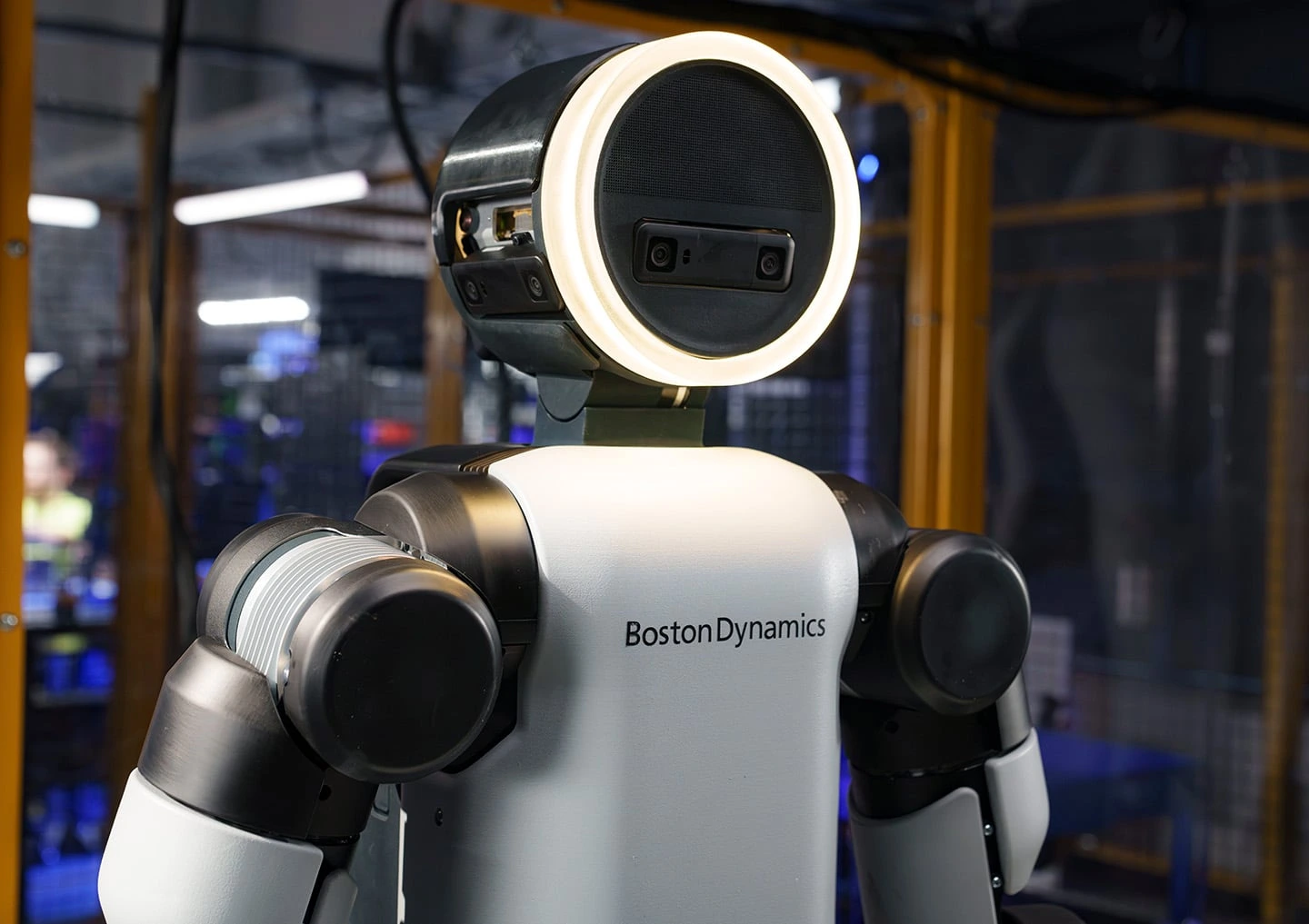
The pace of commercial humanoid deployment announcements has accelerated significantly over the past year. Boston Dynamics’ electric Atlas is in production, with the entire 2026 output already committed to Hyundai and Google DeepMind. Sereact just closed a $110M Series B to scale their Vision-Language-Action system across European warehouses. Humanoids are increasingly becoming part of operational conversations at robotics conferences, especially around warehouse, manufacturing, and logistics use cases.
But talk to the engineering teams actually running these deployments, and a different conversation emerges. The robot works. The software is where things get complicated.
The Gap That Doesn’t Make the Keynotes
Moving a robot from a controlled demo environment to a real production setting exposes every assumption baked into the software stack. Simulation models that seemed adequate turn out to miss the edge cases that matter. CI/CD pipelines designed for small teams start breaking under the pressure of fleet-scale deployments. Architectures that worked fine at pilot scale develop unexpected behavior when ten robots are running simultaneously instead of one.
None of this is new. What’s new is the speed at which companies are being forced to confront it. Commercial pressure to operationalize humanoids and AMRs at scale continues to increase across manufacturing and logistics environments, and the teams responsible for making it happen are running out of time to address the underlying software issues incrementally.
What ROS 2 Lyrical Luth Actually Changes
The upcoming ROS 2 Lyrical Luth release, arriving May 22 with LTS support through 2031, addresses several of these pain points directly. The focus areas, real-time performance improvements, better multi-robot coordination, and tightened security, are not academic additions. They reflect the problems that teams deploying ROS 2 at scale have been reporting for the past two years.
The five-year support window matters as much as the features. Industrial customers need to commit to a platform, and LTS releases are what make that commitment possible. For teams currently running on earlier ROS 2 distributions, Lyrical Luth is a credible migration target, not just a version bump.

Simulation Is Still the Unsolved Problem
The industry’s continued investment in simulation tooling reflects how central the sim-to-real problem remains for production robotics deployments.
The gap shows up in predictable places: sensor noise models that don’t match field conditions, physics approximations that hold in demos but break under load, and test environments that were never versioned or maintained with the same rigor as production code. Teams that close the gap fastest aren’t necessarily using better simulators, they’re treating simulation as a first-class part of the engineering workflow, with CI integration, reproducible environments, and validation gates before anything reaches hardware.
The Robotics Summit & Expo
The Robotics Summit & Expo in Boston (May 27-28) is shaping up to be one of the more useful gatherings of the year for exactly these reasons. With practical deployment, AI integration, and fleet management as focal themes, the conversations on the floor tend to go deeper than the keynotes suggest: how teams are structuring their software organizations as they scale, what architectural decisions made during the research phase look like under production pressure, and where the real bottlenecks are in 2026.
Our Americas Director, Florencia Grosso, will be attending the event together with Alejo Carballude, Business Developer for the unit, representing Ekumen, a Grid Dynamics Company. If you’re attending and working through any of these challenges, we’d welcome the conversation.
The hardware is ready. The question for 2026 is whether the software infrastructure around it is too.
Heading to Robotics Summit? Contact us before the event and let’s find time to talk.